
Predict the future by creating it: Futuristic Surrealism
The Call to the Moon: JFK’s Vision
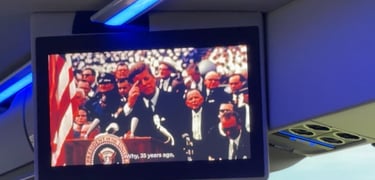
On September 12, 1962, President John F. Kennedy stood at Rice University and delivered a challenge that would redefine human capability: 'We choose to go to the Moon... not because it is easy, but because it is hard.' This speech transformed space from a distant mystery into a new frontier. JFK’s words emphasized that the quest for space was not merely about technology, but about organizing and measuring the best of our energies and skills. It is this 'pioneering spirit'—the refusal to postpone a challenge—that serves as the emotional foundation for my work in this series.
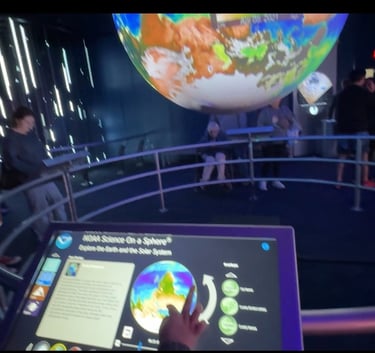
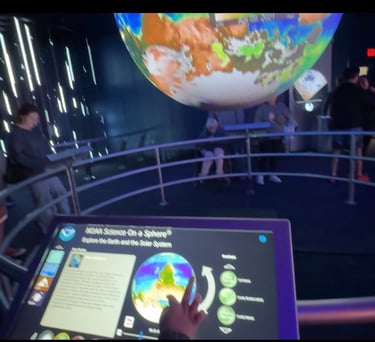
Artemis: The Next Giant Leap
Named after the twin sister of Apollo, NASA’s Artemis Program is the contemporary heartbeat of space exploration. Unlike the brief visits of the 1960s, Artemis aims to establish a permanent human presence on the Moon and utilize the lunar south pole as a stepping stone for Mars. This project represents a shift toward sustainable exploration and international collaboration, creating a 'lunar economy' where science and human consciousness will eventually reside outside of Earth’s atmosphere.
The Modern Space Race: SpaceX & Elon Musk
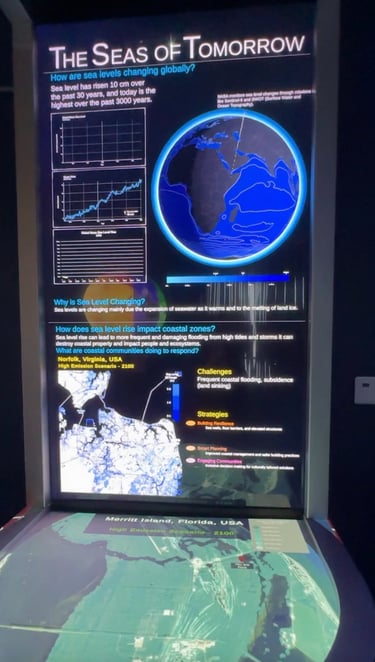
A unique highlight of visiting the Kennedy Space Center today is the visible intersection of government and private enterprise. As the tour buses navigate the historic grounds, they pass by the massive fields and hangars occupied by Elon Musk’s SpaceX. Here, the future is being built in real-time. Witnessing the rapid-prototype research and the sheer scale of the Starship project—often just yards away from where the Apollo missions launched—highlights a new era of 'shared cognition' between human ambition and autonomous technology."after the twin sister of Apollo, NASA’s Artemis Program is the contemporary heartbeat of space exploration. Unlike the brief visits of the 1960s, Artemis aims to establish a permanent human presence on the Moon and utilize the lunar south pole as a stepping stone for Mars. This project represents a shift toward sustainable exploration and international collaboration, creating a 'lunar economy' where science and human consciousness will eventually reside outside of Earth’s atmosphere.
Guardians of History: The Space Museum
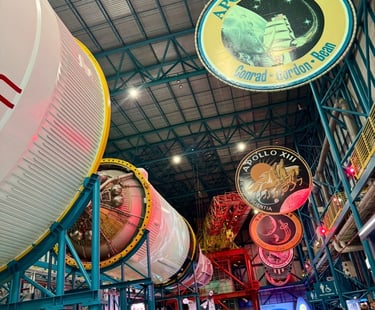
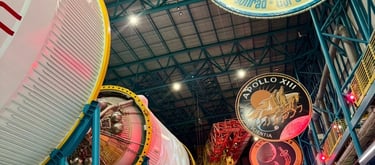
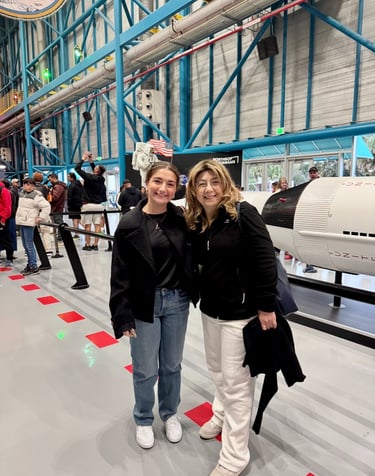
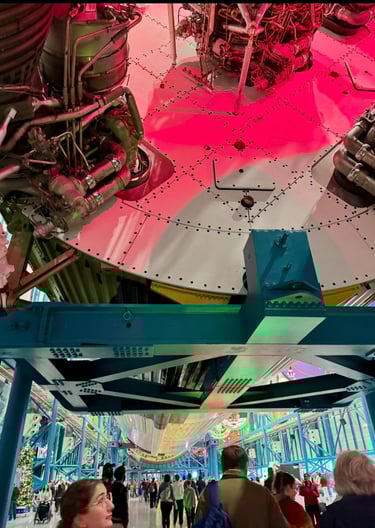
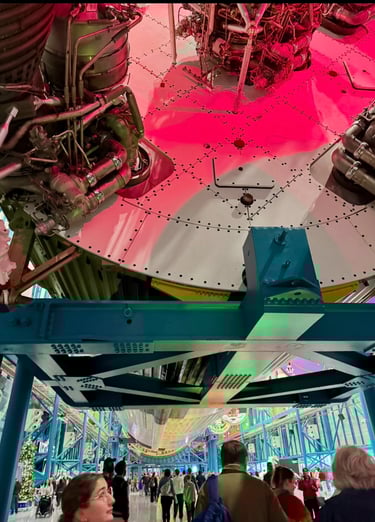
The tangible history of our journey upward is preserved within the Apollo/Saturn V Center and the Space Shuttle Atlantis exhibit. Standing beneath the 363-foot Saturn V rocket or viewing the heat-scarred tiles of the Atlantis orbiter provides a visceral sense of scale. These artifacts are not just machines; they are the vessels of human dreams, preserved in silence. They serve as a constant reminder of the physical textures—the cold metal, the charred carbon, and the vast shadows—that I strive to capture in my paintings.
The Canadian Role in Artemis:
Canada is a key partner in this return to the Moon. In April 2026, Canadian Space Agency astronaut Jeremy Hansen (from London, Ontario) is scheduled to fly on the Artemis II mission. He will be the first non-American ever to leave low-Earth orbit, making this a historic moment for Canadian science. Additionally, fellow Canadian astronaut Jenni Gibbons is serving as his backup. My work celebrates this milestone, reflecting Canada’s ongoing contribution to the global 'Shared Cognition' of the stars.
The Canadian Vantage: A Historic Threshold
As I prepare this body of work in March 2026, Canada stands on the precipice of a new era in space exploration. With the Artemis II mission scheduled for launch as early as April 1, 2026, Ontario's own Jeremy Hansen is poised to become the first non-American to journey beyond low Earth orbit. This mission represents a profound shift in 'Shared Cognition' on a national scale. Supported by backup astronaut Jenni Gibbons—the first Canadian certified as a lunar Capcom—and the technical ingenuity of Canadarm3, this moment transcends mere technology. My art seeks to capture the texture of this Canadian contribution, reflecting a legacy that began with the Apollo landing gear and now continues with our astronauts reaching for the lunar horizon.
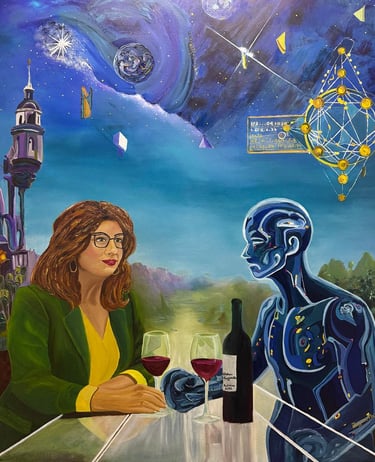
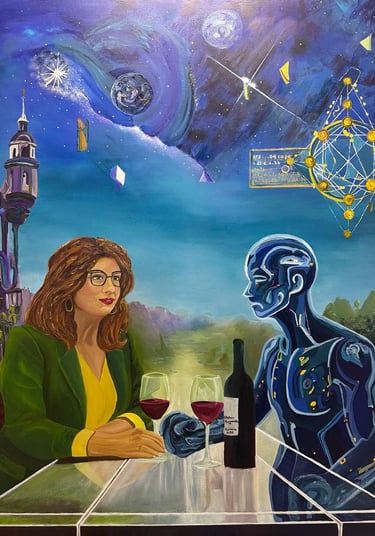
Visual Storytelling: The Human/Non-Human Dialogue "My 2026 studio practice is centered on the 'Shared Cognition' between human consciousness and the vast, autonomous intelligence of the cosmos. As we approach the historic Artemis II mission, I am investigating how the human psyche translates the cold, mathematical reality of space into a relatable, emotional narrative.
The Observer and the Cosmos series is a finite body of work developed through active field research and studio investigation. Works are available for acquisition through direct enquiry and selected exhibition.
For acquisition, institutional loan, or curatorial dialogue regarding this series, contact
In The Observer and the Cosmos, this direction becomes fully articulated. The composition presents a subtle but powerful figurative presence—the human observer—situated within a vast, atmospheric field that suggests the unknown. The presence of the “Other” is not explicitly depicted, yet it is felt. The tension between these two states—human awareness and non-human intelligence—creates the narrative core of the work. The painting operates as a threshold, where perception shifts from observation to participation.
Despina Tunberg
Curator