Visit Artexpo New York April 9-12, 2026 and enjoy a rich selection of magnificent art!

Large-Scale Painting
Stable alternatives.
Margueritte Tonbazian
3/23/20262 min read
As an artist working in Toronto, I am hyper-aware of how the Ontario climate affects my materials. The extreme swings between humid summers and dry winters cause everything to move. When I paint on a 3x6’ (36x72 inch) scale, that movement isn’t just an inconvenience; it is a structural threat to the lifespan of the artwork. If the foundation bows or sags, the paint film will eventually crack, causing irreversible damage.
To ensure my work meets the highest archival standards of curators and collectors, I have standardized my support and priming process. Here is why the materials matter long before the first layer of color is applied.
For standard gallery works, I use pre-stretched Level 3 Artist's Loft canvases from Michaels. They are excellent, 1.5-inch deep supports that provide a taut, professional surface.
However, for pieces extending to 6 feet, cotton duck canvas poses a problem. It has a high elastic memory, meaning it absorbs moisture and sags. When that 6-foot span tightens in the winter and loosens in the summer, it creates tension on the wood frame. Over time, that frame will twist into a bow, and the paint itself will be stressed. For my large-scale commitments, I must find a more stable alternative.
To solve the problem of dimensional instability at $3\times6’$, I choose Cradled Birch Panels from a factory-direct manufacturer, Upper Canada Stretchers (UCS).
A 'cradle' is a wooden frame attached to the back of the plywood face. At 6 feet, standard 1/4" plywood would warp. But a 1.5-inch to 2-inch deep profile panel from a professional manufacturer includes heavy-duty internal cross-bracing. This ensures the 3x6’ piece is completely rigid. UCS uses kiln-dried woods, providing a level of quality and structural integrity that is essential for long-term preservation and is expected by curators reviewing my submissions.
Working with raw wood requires its own specific archival treatment. Raw birch contains natural resins that can seep through the gesso, causing Support Induced Discoloration (SID)—unsightly yellow spots on the painting years later.
Before any paint is applied, I seal the raw birch (front, back, and all edges) with two coats of Zinsser B-I-N Shellac-Base Primer.
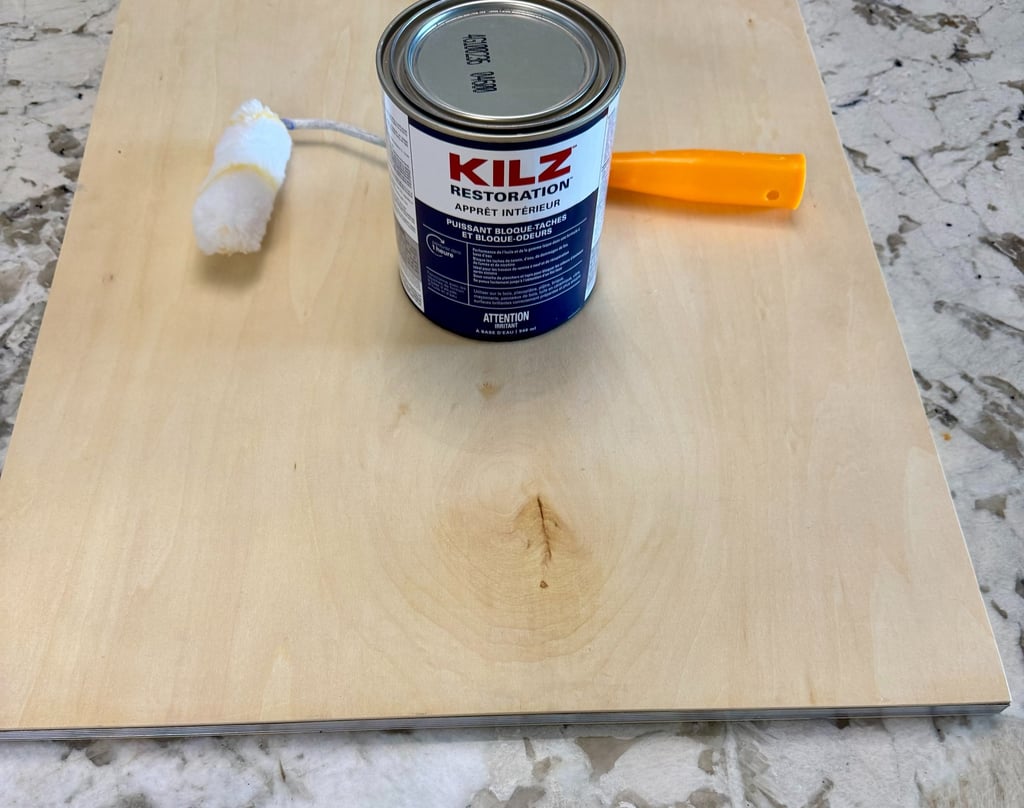
Why Shellac? Alcohol-based shellac dries in minutes and provides an absolute, impermeable barrier. Unlike water-based primers (like Kilz Restoration or Kilz Latex), it will not 'raise the grain' of the birch wood, ensuring the substrate remains perfectly smooth.
Once sealed with shellac, I then apply multiple layers of high-quality Acrylic Gesso. This workflow provides the perfect combination: an inert, stable base (Shellac) topped by the ideal flexible, textured ground (Gesso).
Once the artwork is complete, the final archival step is its presentation. For both my 36x48" Level 3 canvases and my large-scale 36x72" panels, I use custom Floating Frames.
To support local manufacturing and ensure consistent quality, I order my frames through a custom facility rather than a retail storefront. This allows me to specify a 1.5-inch depth that perfectly accommodates the profile of my Level 3 canvases. The 1/4-inch 'float' gap between the artwork and the frame provides a clean, modern aesthetic while ensuring the artwork is structurally protected during transport and display.